No matter how careful you are, skiing and snowboarding always come with a risk of injury from falls or collisions. In fact, when I was younger, I once fell while snowboarding and fractured my wrist. I was taken to a nearby clinic and received treatment, so fortunately it did not become a serious situation. Even for Japanese people, it can be worrying to wonder whether proper medical care is available in the mountains. For foreign travelers, the concerns are even greater:
- Where should I go if I get injured?
- Will English be spoken?
- How much will medical treatment cost?
In this article, we explain the basic steps to take if you get injured at a ski resort in Japan, using Niseko and Hakuba as examples, and provide detailed information about medical systems and estimated costs.
What to Do First If You Get Injured at a Japanese Ski Resort
1. Do Not Force Yourself to Move
If you feel strong pain or discomfort after a fall, continuing to ski or snowboard can be very dangerous. The knees, shoulders, collarbones, and wrists are especially prone to injury in skiing and snowboarding.
2. Call the Ski Patrol
All Japanese ski resorts have ski patrol staff on duty. Ask nearby staff, other skiers, or use on-course radios to contact them. They will provide:
- First aid (bleeding control and immobilization)
- Transportation on the snow
- Judgment on whether you should go to a clinic or hospital
At major ski resorts, many staff members can communicate in basic English. Emergency phone numbers are listed on ski resort websites, and “first aid” icons are also shown on trail maps.
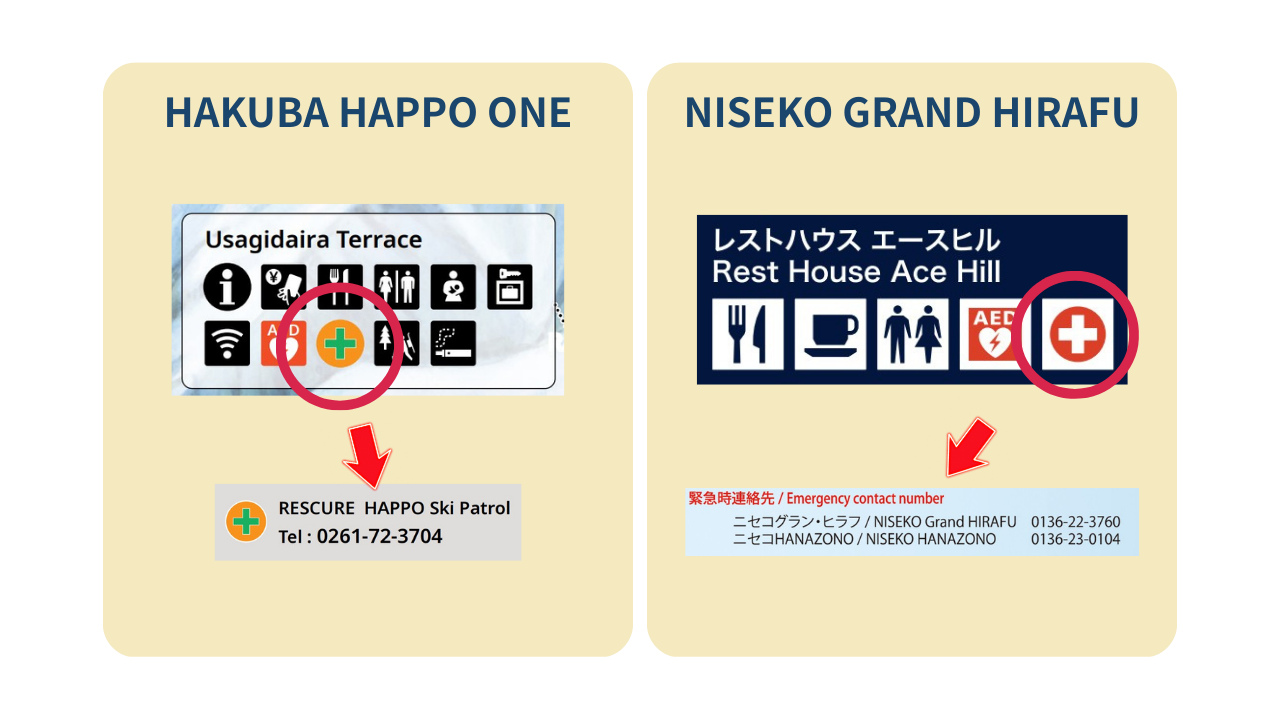
On-Site and Nearby Clinics at Japanese Ski Resorts
Japanese Ski Resorts Mainly Handle Minor Injuries
Many Japanese ski resorts have on-site clinics or first-aid rooms. However, they usually focus on treating:
- Sprains
- Bruises
- Minor cuts
- Temporary immobilization
Most clinics do not have X-ray machines or surgical facilities. If a fracture or serious injury is suspected, you will be transported to a regional general hospital.
Niseko: The Most Advanced Area for Foreign Visitor Support
Clinics and Medical System
Because Niseko attracts a large number of international visitors, it is one of the best-prepared ski resort areas in Japan in terms of medical care.
- Multiple clinics in and around Niseko
- Doctors experienced in ski-related injuries during winter
- Many medical facilities offer English support
In the case of serious injuries, patients are transported to hospitals in Kutchan, Otaru, or Sapporo.
Estimated Medical Costs (Without Insurance)
- Consultation + X-ray: ¥15,000–¥30,000
- Cast immobilization: ¥20,000–¥40,000
- Emergency transport: several tens of thousands of yen (depending on distance)
Because of the high medical standards in Niseko, costs tend to be slightly higher. Travel insurance is essential.
Hakuba: One of the Largest Mountain Resorts on Honshu
Clinics and Medical System
Hakuba also welcomes many foreign visitors and has a solid winter medical system.
- Clinics near Happo-One and Goryu areas
- Seasonal trauma clinics open during winter
- English support is generally limited to basic conversation
For serious injuries, patients are transported to general hospitals in Omachi City or Nagano City.
Estimated Medical Costs (Without Insurance)
- Initial consultation + treatment: ¥10,000–¥20,000
- X-ray examination: ¥10,000–¥20,000
- Fracture treatment: ¥30,000 or more
While costs may be slightly lower than in Niseko, medical treatment in Japan is still expensive without insurance.
Are Medical Costs in Japan Expensive or Cheap?
Japan has a universal health insurance system, which keeps medical costs relatively low for residents. However, foreign travelers are generally required to pay the full cost.
Examples:
- Minor sprain: several thousand yen to around ¥10,000
- Fracture: several tens of thousands to over ¥100,000
- Hospitalization: several tens of thousands of yen per day
Without travel insurance, medical expenses can easily become much higher than expected.
Travel Insurance Is Essential
Foreign visitors skiing or snowboarding in Japan should strongly consider insurance that covers:
- Injuries during skiing or snowboarding
- Emergency transportation costs
- Hospitalization and outpatient treatment
- Helicopter rescue, if possible
Some credit card insurance policies exclude winter sports, so it is important to check coverage in advance.
How to Reduce the Risk of Injury
- Do not push yourself too hard on the first day
- Reduce speed in poor snow or weather conditions
- Wear a helmet
- Take breaks before you become too tired
Japanese snow is light and easy to ride, but this also means higher speeds and stronger impacts when you fall.
Some Japanese ski resorts designate restricted or off-limits areas. If you are injured in these areas, the accident is considered your own responsibility. While rescue may still be provided, you may face very high charges for transportation, labor, and medical costs.
Conclusion: Japanese Ski Resorts Are Safe, but Preparation Is Essential
Japanese ski resorts are considered very safe worldwide because they offer:
- Well-organized ski patrol systems
- High-quality medical care
- Clean and reliable facilities
However, for foreign visitors, medical costs and lack of information are the biggest risks. Major resorts like Niseko and Hakuba offer greater peace of mind, but no matter where you ski:
- Call the ski patrol if you get injured
- Do not force yourself to move
- Always have travel insurance
Remembering these three points will help ensure a safer and more enjoyable ski or snowboard trip in Japan.