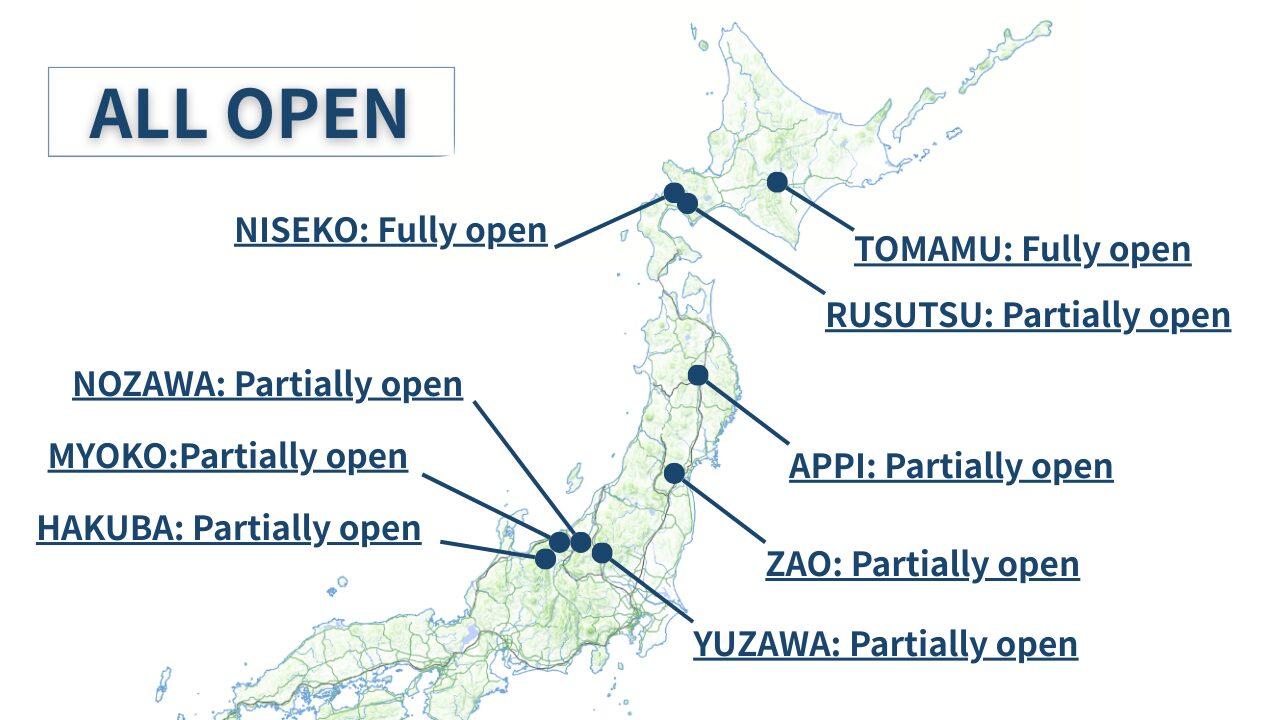
In December, snowfall was lower than average, forcing many ski resorts to delay their opening. If you want to experience JAPOW (Japanese Powder) in Japan, January is the most reliable and ideal best season.
On the other hand, January is expected to bring average or above-average snowfall. January offers the following conditions, making it the least risky time for foreign visitors:
- Stable snowfall
- Low temperatures and excellent snow quality
- Frequent snow resets
In this article, we explain the overall snowfall outlook for January and highlight snow conditions and best targets in Japan’s major ski areas, focusing on Hokkaido, Tohoku, Hokuriku, and Nagano.
Japan’s January Snow Forecast: Overall Trend
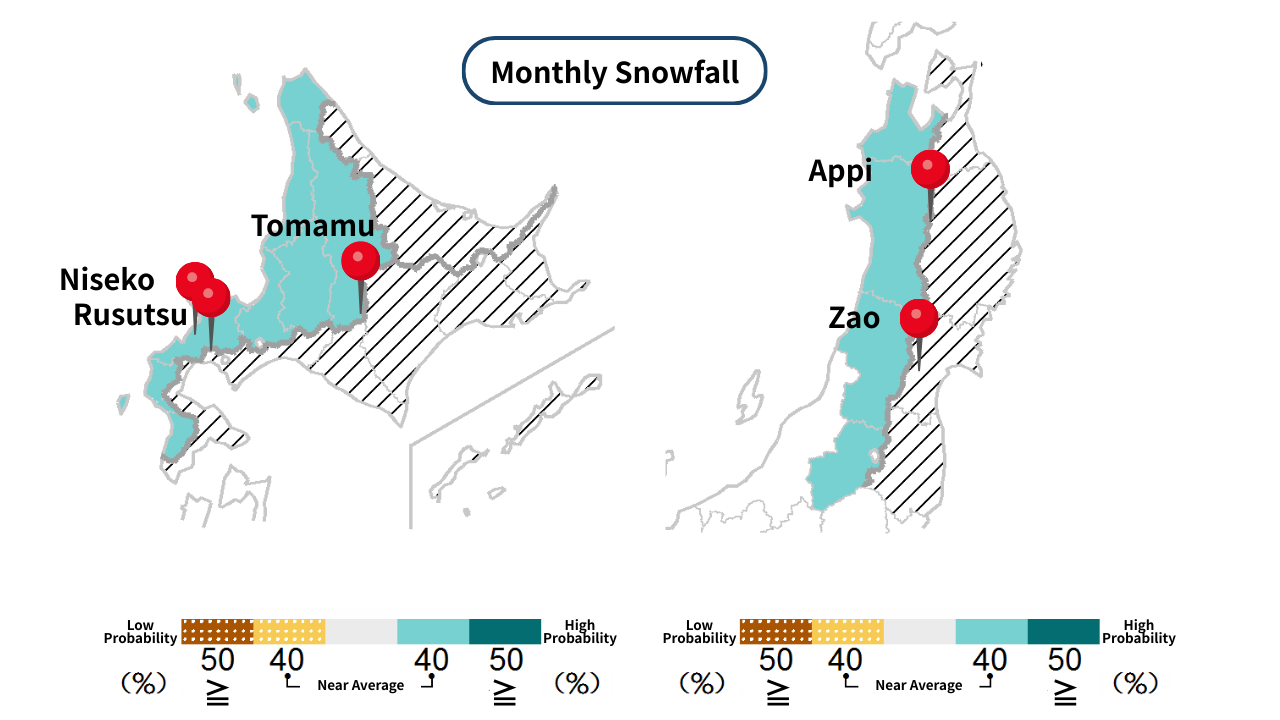
On December 25, the Japan Meteorological Agency released its one-month forecast. In January, cold air from Siberia flows steadily into Japan, bringing continuous snowfall mainly to the Sea of Japan side.
Characteristics of January
- Monthly snowfall: High (in some regions, the highest of the year)
- Temperature: Very low
- Snow quality: Dry and light powder is common
- Snow preservation: Excellent (slow to melt)
In mountainous areas along the Sea of Japan coast, conditions such as 20–40 cm of overnight snowfall or consecutive days of snow are not unusual.
Hokkaido: Niseko & Tomamu
World-Class Stable Powder
January Snow Characteristics
- Temperature: Often around -10°C
- Snow quality: Extremely light and dry
- Snowfall frequency: Frequent resets, almost weekly
Niseko
In January, Niseko fully enters peak JAPOW season. The snowfall is fine, light, and buoyant, making it easy to ride even for deep-snow beginners.
- Snow accumulates well in tree runs
- Snow quality holds up even after grooming
- Good snow often lasts until night
However, crowds reach their peak. To score powder, early-morning starts or night skiing are highly recommended.
Tomamu
Tomamu is colder and windier than Niseko, resulting in even lighter snow.
- Stable snow depth and quality throughout January
- Wide slopes make it easier to find powder
- Lower percentage of foreign visitors compared to Niseko
Recommended for those who want Hokkaido-quality snow in a calmer environment.
Tohoku: Appi & Zao
Top-Class Snowfall and Quality in Honshu
January Snow Characteristics
- Temperature: -5°C to -10°C
- Snowfall: Heavy
- Snow quality: Dry, similar to Hokkaido
Appi Kogen
January is the most stable period at Appi.
- Vast, well-groomed slopes
- Consistent snow quality that resists deterioration
- Still relatively few foreign visitors
While the powder is not as light as Hokkaido, you can enjoy both high-speed cruising and powder runs.
Zao Onsen
In January, snowfall increases rapidly, filling tree runs and ungroomed areas.
- Slightly heavier snow but large volumes
- Peak season for frost-covered trees (Snow Monsters)
- Perfect combination with hot springs
Visibility can be poor on some days, so choosing the right goggles is essential.
Hokuriku: Nozawa Onsen & Myoko
Powder Areas Focused on Snow Volume
January Snow Characteristics
- Snowfall: Extremely heavy
- Snow quality: Slightly moist
- Powder depth: Among the best in Japan
Nozawa Onsen
In January, Nozawa becomes a place where “there is simply a lot of snow.”
- Over 30 cm overnight snowfall is common
- Snow accumulates well in forested areas
- Roughly equal mix of Japanese and foreign visitors
While not as light as Hokkaido, the snow has excellent buoyancy and delivers true JAPOW.
Myoko
Myoko is one of Japan’s heaviest snowfall regions.
- Among the highest snow volumes nationwide
- Many powder days in January
- Ideal for tree skiing
Best suited for riders who prioritize depth over lightness.
Nagano: Hakuba
A Balanced JAPOW Destination
January Snow Characteristics
- Temperature: Around -5°C
- Snow quality: Varies by day
- Significant differences between areas
In January, stable snow can be expected, especially at higher elevations.
- Happo, Goryu, and Hakuba 47 are best after snowfall
- North winds bring better snow quality
- South winds tend to produce heavier snow
January offers the best balance of snow, terrain, and access, making Hakuba extremely popular with foreign visitors.
Things to Note When Skiing in Japan in January
- Cold-weather protection is essential (especially in Hokkaido and Tohoku)
- Lift suspensions due to blizzards are possible
- Transportation delays due to heavy snow
- Peak-season crowds at popular resorts
January is high season (regular season) at all ski resorts, and lift ticket prices are higher. Crowds are also expected, so planning trips on weekdays within January is recommended.
Conclusion: January Is the Most Reliable Month for JAPOW
January in Japan offers the perfect combination of snow quality, snowfall volume, and consistency, making it the ideal time for foreign skiers and snowboarders.
- Light snow priority → Hokkaido
- Snow volume priority → Hokuriku
- Balanced conditions → Hakuba
- Avoiding crowds → Tohoku
No matter which area you choose, January provides a very high chance of experiencing true JAPOW. If your schedule allows, choosing your destination based on weather forecasts is the key to success in Japan.
January in Japan is the most reliable “guaranteed snow season” for snow lovers from around the world.