In recent years, freestyle skiing and snowboarding have attracted growing global attention. Among these disciplines, the most dynamic and crowd-pleasing event is the Halfpipe. Today, Japan stands at the very center of the world’s halfpipe scene.
News: Snowboard Halfpipe World Cup Season Opener
Ayumu Hirano Wins, Japanese Riders Sweep the Podium
At the opening event of the 2024–25 Snowboard Halfpipe World Cup, Japan’s Ayumu Hirano claimed a brilliant victory. Japanese riders swept the podium from first to third place, leaving a strong impression on the world with the exceptional level of Japan’s halfpipe snowboarding.
Ayumu Hirano is widely known as an Olympic gold medalist and has established himself at the top of the sport by consistently landing ultra-high-difficulty tricks such as the triple cork 1440. At this World Cup event, his highly polished run and overwhelming air height left competitors from other countries far behind.
Following this news, interest among overseas snowboarders has grown rapidly, with many asking:
- “Why is Japan so strong in halfpipe?”
- “Can you actually ride halfpipes in Japan?”
What Is Halfpipe Competition?
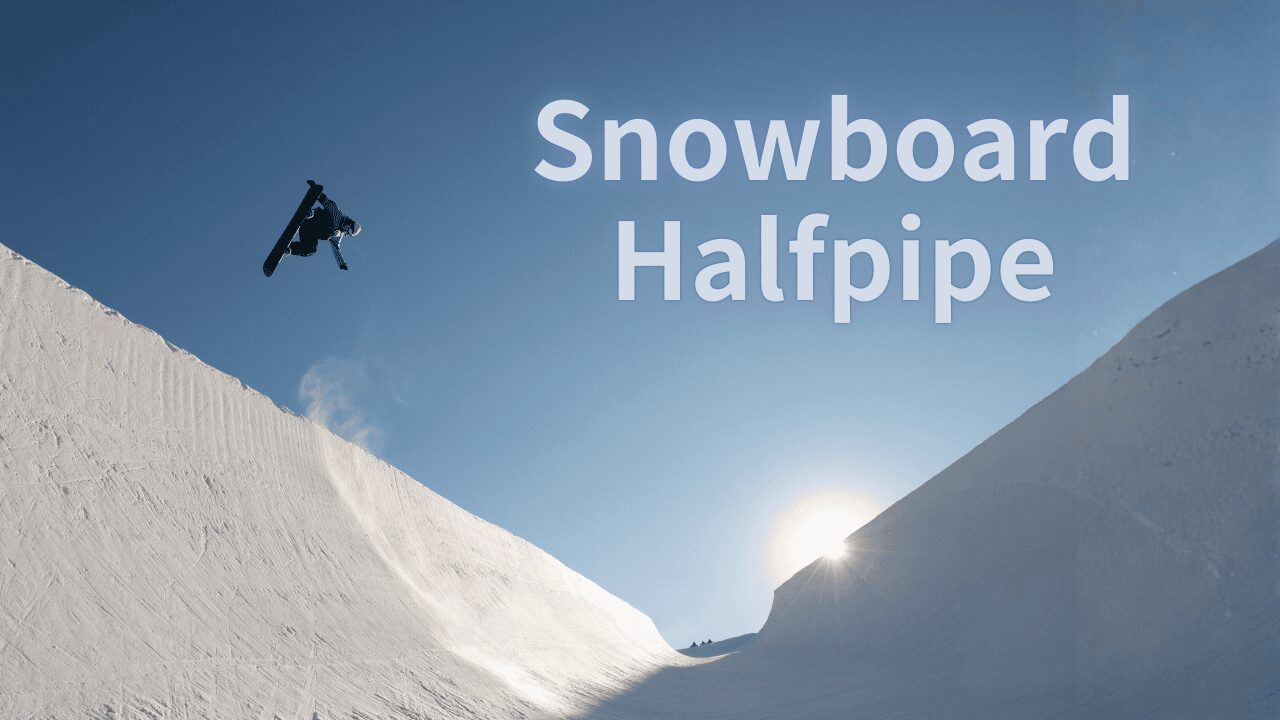
Halfpipe is a discipline that uses a U-shaped snow structure where riders move back and forth between the left and right walls, performing jumps and spinning tricks. The walls are typically about 6–7 meters high, and the pipe stretches roughly 100–200 meters in length, often described as a massive “snow stadium.”
Judging Criteria
In halfpipe competitions, the following elements are evaluated comprehensively:
- Difficulty: The technical difficulty of the tricks
- Amplitude: The height of the jumps
- Execution: Stability and cleanliness of landings
- Variety: Whether the rider avoids repeating the same tricks
- Overall Impression: Flow, speed, and overall composition
It’s not just about the number of rotations—smooth transitions, rhythm, and speed are equally important.
Why Is Japan So Strong in Halfpipe?
There are several key reasons why Japan is considered a halfpipe powerhouse:
- Consistently high-quality snow that allows halfpipes to maintain their shape over long periods
- Ski resorts with permanent, dedicated halfpipes
- Environments where riders can experience halfpipe riding from a young age
- World-class grooming and shaping technology (pipe cutters)
Thanks to these factors, Japan allows even recreational snowboarders to experience competition-level halfpipes.
Ski Resorts in Japan Where You Can Ride a Halfpipe
While Japan has many ski resorts, only a limited number maintain full-scale, permanent halfpipes. Below are some representative resorts that are especially popular with international riders and offer halfpipes at an international competition level.
Hoshino Resorts Tomamu (Hokkaido)
Located in Hokkaido, Hoshino Resorts Tomamu is an essential destination when discussing Japan’s halfpipe culture. In the past, it has hosted FIS-certified events and world-class competitions, nurturing many top riders.
Key Features
- Top-tier halfpipe construction technology in Japan
- High walls designed for speed and massive air
- Frequented by riders with international competition experience
Tomamu’s halfpipe has a strong “competition-focused” character and is best suited for intermediate to advanced riders. It is recommended for those who already understand the fundamentals rather than complete beginners.
Nozawa Onsen Ski Resort (Nagano)
Nozawa Onsen Ski Resort, one of Japan’s premier large-scale ski resorts, is another rare location where you can experience a halfpipe. While it is famous for its traditional hot spring town, its freestyle environment is also highly developed.
Key Features
- One of Japan’s top-class snow parks
- Integrated layout combining halfpipe, jumps, and jib features
- Many visitors from Europe and North America
One of Nozawa Onsen’s biggest attractions is the ability to relax in authentic hot springs after riding the halfpipe. For foreign visitors who want to enjoy both snowboarding and Japanese culture, it is an ideal destination.
ABLE Hakuba Goryu & Hakuba47 (Nagano)
Located in the Hakuba area of Nagano, ABLE Hakuba Goryu & Hakuba47 is a ski resort where freestyle culture is deeply rooted. Many professional riders use it as a training base.
Key Features
- High-quality halfpipes built every season
- Extensive parks with jumps, rails, and freestyle features
- A highly international rider community
Hakuba47 is particularly attractive for international visitors, as a large percentage of riders are from overseas and English is widely spoken. Riders of all levels, from beginners to advanced, can challenge themselves at their own pace.
Important Tips When Riding a Halfpipe in Japan
When foreign snowboarders try halfpipe riding in Japan, it’s important to keep the following points in mind:
- Helmet use is strongly recommended and often expected
- Only one rider should drop in at a time
- Warm up thoroughly before entering the pipe
- Avoid attempting jumps beyond your skill level
Japanese ski resorts place a strong emphasis on manners and safety, which contributes to a secure and comfortable riding environment.
Conclusion
Halfpipe skiing and snowboarding is now a discipline where Japan leads the world. The success of top riders such as Ayumu Hirano clearly demonstrates the high quality of Japan’s snow, facilities, and athlete development systems. Above all, Japan’s greatest appeal is that ordinary snowboarders can actually ride world-class halfpipes.
Resorts such as Tomamu, Nozawa Onsen, and Hakuba Goryu & Hakuba47 are dream destinations for competition-minded riders.
Personally, I’m not yet skilled enough to challenge a full-scale halfpipe myself. However, if you’re thinking,
- “I want to experience a real halfpipe,”
- “I want to ride on a world-class stage,”
then Japan’s snowy mountains are without question one of the best choices you can make.