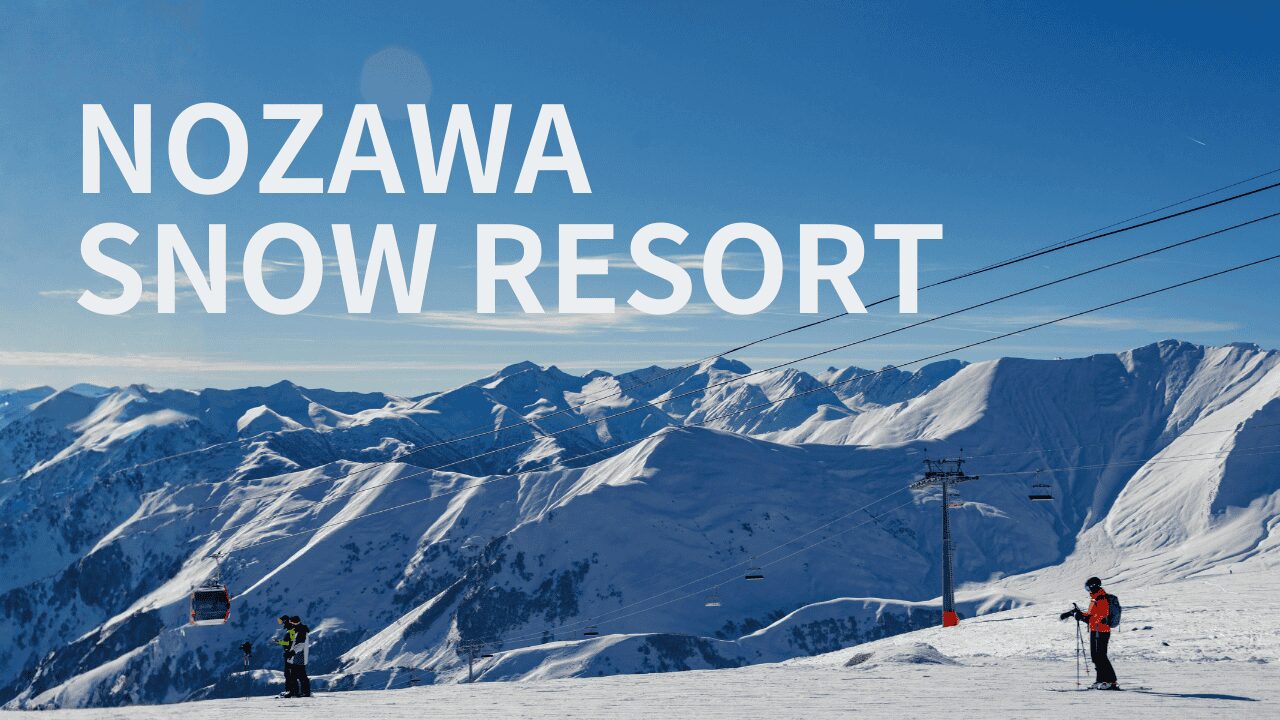
“Ski, soak, and stroll.” There are surprisingly few places in Japan where all three work at the same time. Nozawa Onsen Snow Resort in Nagano stands out because it combines a ski area large enough to enjoy seriously with a traditional hot-spring town connected directly to the base area. The moment your day on the mountain ends, you can take off your ski or snowboard boots and step into narrow lanes filled with steam. That seamless flow is what makes Nozawa Onsen feel complete.
Why Nozawa Onsen Works: More Than Snow Quality—It’s the Density of the Experience
Nozawa Onsen’s appeal cannot be explained by “JAPOW is here” alone. Yes, on days when fresh snow arrives, you can aim for dry new powder, and riding through the forest is genuinely fun. But what makes the trip special is the overall density of the stay.
- The onsen town sits right at the base (less stress from transfers)
- There is a culture of public bath hopping (your post-ski plan is already set)
- Food, drinks, and the atmosphere of the alleys are strong (nights are not boring)
It is also a major advantage for travelers that you can easily adjust your plan to the weather—“all-in on skiing today,” “more onsen and town walking tomorrow,” and so on.
Terrain and Scale: Long Runs and Variety Keep It Fun
Nozawa Onsen Snow Resort is one of the destinations in Japan that tends to satisfy people who want to ski and ride properly. The vertical drop is said to be about 1,085 meters, and the longest run is said to be about 10 km, making it a layout that stays enjoyable even if you spend the whole day cruising.
The overall impression is simple: “open and wide higher up, closer to forest and village lower down.” Near the top, the views open up and long courses let you enjoy speed and flow. From mid-mountain to the lower areas, the forest feel becomes stronger, and on storm days you will likely get excited about natural terrain features.
Nozawa Onsen also has a history as a stage for international competitions, and race-oriented course information is published (for example, vertical details for the Kandahar course). The coexistence of a relaxed onsen town and a serious mountain is part of Nozawa Onsen’s identity.
The Day Isn’t Over After You Ride: An Onsen Town with 13 Public Baths
What makes Nozawa Onsen truly unique is the strength of its hot-spring culture. The most famous element is the 13 communal bathhouses (soto-yu) scattered throughout the town. These baths have been protected by the local community, and travelers are essentially stepping into that living culture. The more quietly you follow the rules, the more satisfying the experience becomes.
For first-timers, remembering the basics will make everything smoother.
- Wash before entering (and take rinsing seriously)
- Do not put towels into the bath
- Share space in the changing area and washing area
- The water can be very hot—check before you jump in
Even if your legs are destroyed after skiing, the “I feel recovered after soaking” effect can be surprisingly strong. Many people end up adding one more bath at night.
Access: Easier Than You Might Expect from Tokyo
Nozawa Onsen is not a “remote hidden valley.” From the Tokyo area, a standard route is to take the Hokuriku Shinkansen to Iiyama Station, then use a bus into the onsen town. From Iiyama Station, services such as the direct Nozawa Onsen Liner (about 25 minutes) and local-route buses (about 40 minutes) are available. As a rough reference, one-way fare from Iiyama Station to Nozawa Onsen (Central Terminal) is also listed as 600 yen for adults.
A small but important point is “how to ride the bus.” Depending on the service, you may buy a ticket on-site without a reservation, or you may pay when you get off. The more experienced you are as a traveler, the more likely you are to assume it works the same as elsewhere—so this is worth checking.
January 15 Feels Like Another World: The Dosojin Festival (Fire Festival)
If your schedule matches, the Dosojin Festival (Nozawa Onsen’s Fire Festival) on January 15 is unforgettable. On a winter night, flames and chants transform the atmosphere of the town, and you can feel, “This is less a tourist spot and more a living community.” Being able to take home a piece of Japanese winter culture along with your ski trip is also one of Nozawa Onsen’s strengths.
Staying Smarter: Three Ways to Enjoy Nozawa Onsen 120%
Finally, here are three ideas that tend to raise overall satisfaction.
- When the weather gets rough, shift to the town
Rather than forcing it in a blizzard, recover with public baths, cafés, and casual food, then bet on the next day. Nozawa Onsen makes this switch easy. - Fix your post-ski routine
Creating a personal “golden pattern” such as “lodging → public bath → dinner → one more bath” can make the stay feel dramatically more comfortable. - Respect the town rules around bathing
The public baths are not simply tourist facilities; they are an extension of local life. The quieter and cleaner you use them, the better the atmosphere becomes.
Conclusion: Nozawa Onsen Connects Skiing, Onsens, and Culture in One Line
Nozawa Onsen Snow Resort is not just “a ski area with good snow.” It packs a mountain big enough for long runs, an onsen town with 13 public baths, and cultural experiences like the winter fire festival into a dense, coherent trip. If you want to ski JAPOW but also experience a distinctly Japanese winter, Nozawa Onsen is a resort that delivers the answer with minimal detours.